
This section of our site is to remember the men and women of God through the centuries that had dedicated their lives to God and to His service. Some of these individuals had long lives full of various ministries, and were imprisoned, tortured and martyred because of their faith. The following biographies are not only written to recognize who those people were, but also to learn and be motivated from their faith, service, and contributions to God’s work.
While reading about these heroes of faith, we should keep in mind that none were perfect, and all had their different weaknesses. It is important to keep the focus upon their spiritual contributions and the various sacrifices they made, as opposed to the shortcomings in their lives.
Consider the Old Testament Woman Rahab. Although she was a prostitute, at a specific time in which the need was there, she stood for the Lord. Rahab put her life on the line in order to protect the servants of God from being captured by the enemy. What she did had a major effect in God’s plan, and for that purpose, her name is mentioned along with the heroes of faith in Hebrews 11:31.
Imagine this, a prostitute’s name is written along with Abraham the father of faith, Moses, who led God’s people out of Egypt, and Enoch, who walked with God for three hundred years. Hebrews purposely emphasizes the fact that she was a prostitute to remind us all about the merciful nature of God towards every man or woman who seeks Him; the Lord will always forgive, restore, and use them for a great purpose.
The Cloud of Witnesses
Robert Govett
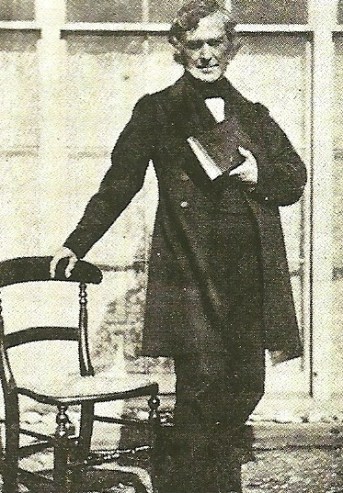
1813 — 1901
Robert Govett was a gifted Bible teacher who wrote many Christian books and brochures. Govett focused most of his work on the book of Revelations. One of his most notable works is titled The Apocalypse.
As Govett began his pastoring initiative, his work — labeled “Bazaar Chapel”—rapidly increased in numbers. He believed in a partial or selective rapture, the idea that before the Great Tribulation a group of ruptured saints and overcomers are only qualified to reign with Christ during the millennium kingdom.
Robert Govett was of the first Christian writers who established a clear understanding of the “Judgment seat of Christ” and its relevance to the Millennium Kingdom. He explains in his writings that eternal life is a gift that God freely gives to whoever accepts Jesus Christ as his or her savior; however, ruling and reigning with Christ in the Millennium Kingdom is a prize given to the Christians who are “overcomers”—meaning those who have submitted to the working of the Holy Spirit in sanctifying an individual.
Famed 19th-century preacher Charles Spurgeon said of Govett, “[He] wrote a hundred years before his time, and the day will come when his works will be treasured as sifted gold.”

By 1870, Müller had established 5 housing units, which offered shelter to 1722 orphans.
Madame Guyon
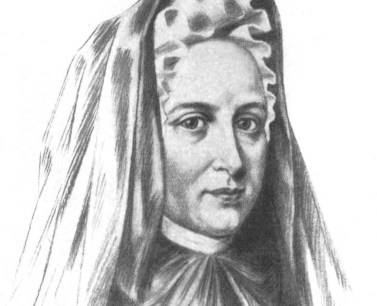
1648 — 1717
Forced into an arranged marriage at age 16 to a man 22 years her senior, Madam Guyon began her struggles at a very young age. She grew up in a very religious household and was neglected a proper education.
During her marriage, Guyon suffered miserable at the hands of her mother-in-law. After twelve years of marriage, her husband Jacques Guyon died. The following years were filled with much grief as her mother, half-sister, and son died. Adding to the grief was the death of her daughter and father, both of whom died within days of one another.
Guyon was a 28-year old widow with 3 children; however, she believed in God’ perfect plan and kept her faith. Though she was very wealthy, the course of her life was changed due to her faithfulness to God’s word. In the beginning of 1685 she began to spread the doctrine on faith and prayer through a notable publication titled “Moyen court et facile de faire orassion.”
Madam Guyon received major backlash from prominent Catholic leaders as she defended the belief that salvation is a free gift of God resulting from his grace rather than human works. This stance was clearly evident in one of her writes. Guyon writes, “ . . . the righteous, supported by the great number of works of righteousness he presumes to have done, seems to hold his salvation in his own hands, and regards heaven as the recompense due to his merits . . . His Saviour is, for him, almost useless.”
On December 4, 1695, police in Paris arrested Guyon — her arrest consented by the king and supported by the Catholic Church — and remained imprisoned until March 21, 1703. After being in captivity for seven years, she lived with her son in a village where many Christians from around the world would visit her and learn from her writings and poetry.
“There was a period when I chose, a time and place for prayer . . . but now I seek that constant prayer, in inward stillness known . . . ” — excerpt from a poem by Guyon regarding prayer.
 Workers' Ministries